


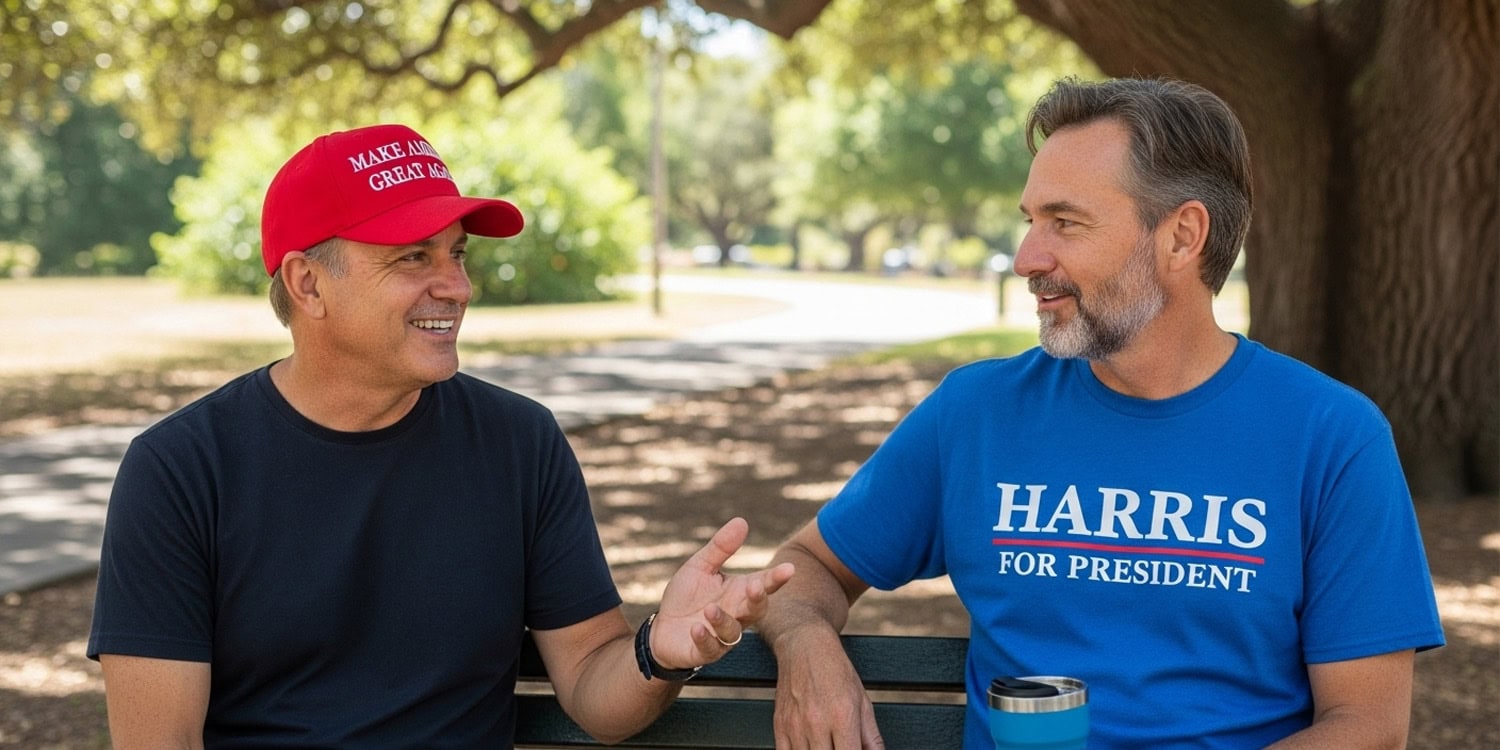
Many people assume that supporters of opposing political parties have zero interest in listening to different perspectives. This belief often stops individuals from attempting any form of communication. However, recent research published in the Journal of Experimental Social Psychology indicates that political rivals are actually far more receptive than people assume, and learning this reality can encourage cross-party conversations.
Understanding the Barrier
Political polarization fuels social conflict, science skepticism, and misinformation. Bridging these divides usually starts with simple conversations, yet many people decide against talking because they believe it is a waste of time. Led by psychologist André Mata from the University of Lisbon alongside colleagues from Linköping University, a research team explored the psychological hurdles keeping inter-partisan dialogue from happening. They suspected that people avoid interaction simply because they think the other side is completely closed off to fresh ideas.
What the Surveys Revealed
To test this, the researchers surveyed 198 participants in Portugal and 402 participants in Sweden. Participants evaluated their own willingness to listen to contrary opinions and then answered the same questions from the viewpoint of someone supporting their least liked political party.
The findings showed a clear social perception bias. Participants consistently rated themselves and members of their preferred party as more open-minded than supporters of their least liked party. When comparing these assumptions to the actual self-reported scores of people from those disliked parties, a significant gap appeared. Individuals consistently underestimated how willing their rivals were to listen.
Expecting an opponent to be rigid led participants to anticipate that a political chat would be stressful and unpleasant. This pessimistic expectation correlated with a lower overall intention to converse.
Changing Perceptions Through Experiments
In a second study featuring 600 Swedish participants, researchers tested whether changing these views could alter communication habits. Participants read descriptions of fictional characters who supported the participants' least liked party. Half the characters were described as highly receptive to different values, while the other half were described as unreceptive.
When the fictional opponent was described as receptive, participants expected more positive interactions. They expressed greater willingness to engage in political discussions and casual non-political chats, such as talking about hobbies or buying vintage furniture.
A final study with 120 Portuguese university students tested a real-time correction. Participants guessed how supporters of their least liked party answered the open-mindedness questions. Half of the group received immediate feedback showing actual average scores from those opponents. Seeing the real survey data successfully adjusted participants' views, leading them to expect that conversations would be less stressful and more informative, while also increasing their willingness to talk.
Important Caveats
The researchers noted that the relationship between avoiding conversations and assuming the worst can run in both directions, as people might convince themselves an opponent is closed-minded to justify walking away. Furthermore, because the studies focused on European nations with multi-party systems, the findings do not map perfectly onto the two-party system of the United States. Cultural and electoral differences mean interventions to reduce polarization must account for local contexts.